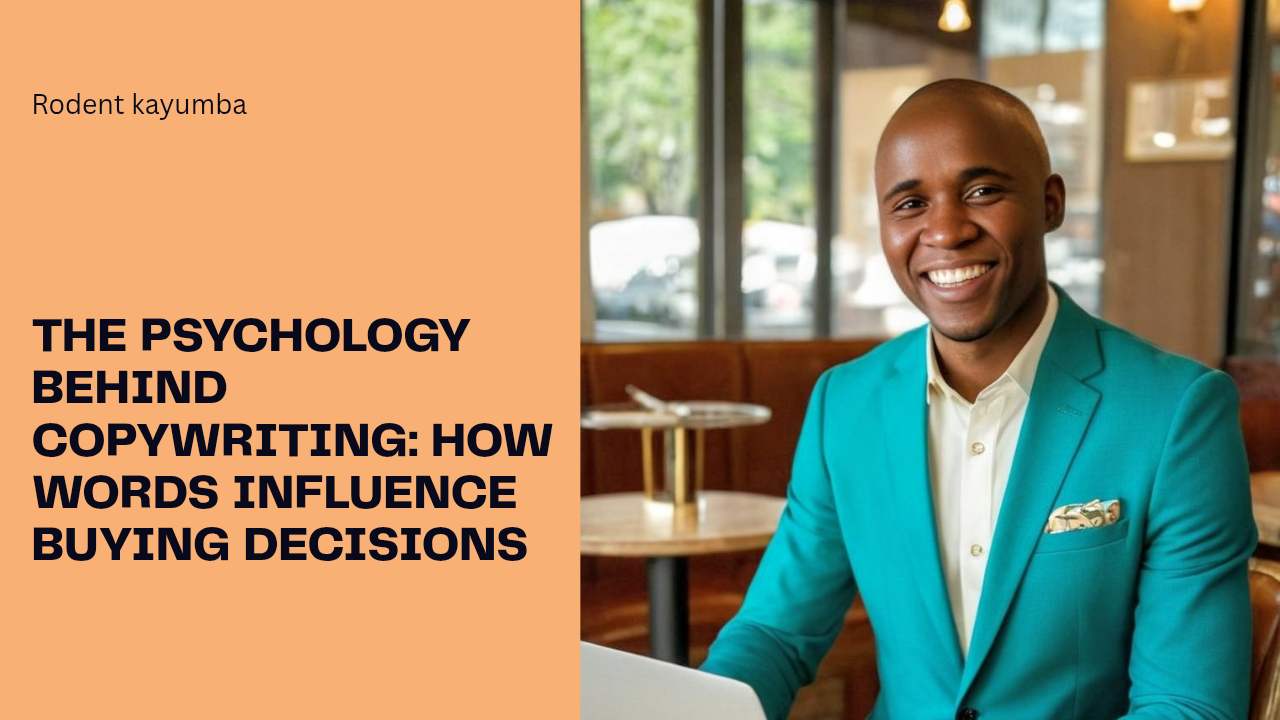
Discover the psychology behind persuasive copywriting and how powerful words influence buying decisions.Learn proven tactics and real- World examples to write copy that converts.
Introduction
Copywriting isn’t just about writing pretty sentences—it’s about persuasion. It’s the art and science of using words to influence human psychology, guide emotions, and lead the reader to take specific actions. Whether you're selling a product, promoting a service, or building a personal brand, mastering the psychology of copywriting is essential to achieving success in today’s digital economy.
This article explores the powerful connection between psychology and effective copywriting. We'll dig deep into cognitive triggers, emotional drivers, trust-building tactics, and real-world examples that show how copywriters influence buying decisions every single day. This is your 5,000-word masterclass in persuasive writing.
1: Understanding Consumer Psychology
1.1 What Drives People to Buy?
At the heart of every buying decision lies a blend of logic and emotion. People buy to:
- Solve a problem
- Experience pleasure
- Avoid pain
- Gain social approval
- Fulfill an identity
While logic plays a role, studies show that 90% of decisions are emotionally driven and later justified with logic. Great copy taps into those emotions—making the reader feel heard, seen, and inspired to act.
1.2 The Brain's Buying System
The human brain processes marketing messages using three systems:
-
Reptilian Brain (instinct and survival)
-
Limbic System (emotions and memory)
-
Neocortex (logic and reason)
Great copywriting speaks first to the reptilian brain and limbic system, then supports the message with neocortex-driven facts and features.
Example:
- Emotional hook: “Are you tired of living paycheck to paycheck?”
- Logical follow-up: “Our budgeting tool helped 50,000+ users save over $1M last year.”
2: Psychological Triggers That Make Copy Irresistible
2.1 Scarcity
The fear of missing out (FOMO) is a powerful motivator. Scarcity makes people act quickly.
Examples:
- "Only 3 seats left in this masterclass"
- "Offer expires in 24 hours"
2.2 Authority
We’re wired to trust experts and leaders. Quoting data, certifications, or influencers adds credibility.
Examples:
- “Endorsed by Harvard researchers”
- “Used by top CEOs and athletes”
2.3 Social Proof
If others are doing it, it must be good. Use testimonials, reviews, or user stats.
Examples:
- "Join 100,000 satisfied users"
- “5-star reviews on Trust pilot”
2.4 Reciprocity
When you give value first, people feel compelled to give back—often through a purchase or sign up.
Examples:
- Free ebooks, checklists, or guides
- Free trials or consultations
2.5 Commitment and Consistency
We want to be consistent with our public choices. If we say "yes" once, we’re more likely to say it again.
Example:
- Starting with a small opt-in like a newsletter, then offering a paid course
3: Emotional Copy That Converts
3.1 Emotional vs. Rational Selling
Emotion sells. Logic supports.
Focus on emotional benefits first:
- Feel more confident
- Save time for your family
- Enjoy financial freedom
Then use logic:
- 24/7 customer support
- 30-day money-back guarantee
- Advanced technology specs
3.2 Use Emotional Power Words
Power words trigger subconscious emotions. Here are a few:
-
Greed: free, exclusive, instant, save
-
Fear: warning, hidden, secret, costly
-
Trust: proven, guaranteed, backed, results
-
Belonging: join, become, community
-
Desire: unlock, unleash, achieve, dream
Example sentence:
“Unlock the secret strategies top entrepreneurs use to triple their income—guaranteed.”
3.3 Create a Vivid Picture
Use storytelling, metaphors, and imagery to bring your message to life.
Example:
"Imagine waking up every morning knowing your business runs itself while you sip coffee on a beach."
4: Structuring High-Converting Copy
4.1 The AIDA Formula
One of the most proven copywriting structures:
-
Attention: Grab with a headline
-
Interest: Explain benefits, not just features
-
Desire: Trigger emotion & relatability
-
Action: Ask for the next step (CTA)
Example:
- Headline: “Tired of struggling to grow your brand?”
- Interest: “Discover the tools used by 6-figure business owners.”
- Desire: “Finally gain the confidence to sell your services without begging.”
- Action: “Download the free blueprint today.”
4.2 PAS Formula
Another go-to formula:
Example:
“Still living paycheck to paycheck? You’re not alone—and it’s not your fault. Discover the system that helped 10,000 people escape financial stress.”
4.3 The Storytelling Framework
People remember stories, not statistics. Use a simple framework:
-
Hook: Grab attention
-
Struggle: The problem
-
Breakthrough: How you/they solved it
-
Success: The result
-
Moral: What others can do too
5: Trust Builders in Copywriting
5.1 Testimonials & Reviews
Add genuine quotes, video snippets, or screenshots of real users.
5.2 Data & Case Studies
Cite studies, user stats, or expert-backed claims.
Example:
“97% of users reported higher productivity within 30 days.”
5.3 Transparency & Authenticity
Don’t hide flaws—acknowledge them and show your honesty.
Example:
"This won’t work unless you’re willing to follow the system."
6: Real-World Examples of Psychological Copywriting
6.1 Apple
Apple uses emotional triggers like lifestyle, simplicity, and elegance over tech specs.
Copy Sample:
"Think different."
6.2 Nike
Nike speaks to identity, self-worth, and ambition.
Copy Sample:
"Just Do It."
6.3 Canva (Melanie Perkins Story)
Melanie Perkins didn’t pitch Canva with tech specs. She sold the dream of design made easy for everyone.
Copy Lesson: Sell the ease of transformation, not the tool.
7: Faith, Empowerment, and the Unemployed Dreamer
Copywriting isn’t just for products—it’s a tool for personal mission. As someone creating content to empower unemployed youth and students, your message should breathe faith, hope, and self-belief.
“Create your own luck” isn’t just a slogan—it’s a calling. If Melanie Perkins could build Canva from her dorm room and Mark Zuckerberg could start Facebook from a dorm, so can others who embrace bold ideas and take faith-driven action.
Speak directly to their pain:
- "You feel overlooked, underestimated. But you have a gift."
- “You may not have a degree—but you have drive.”
- “You don’t need permission to change the world—just a starting point.”
This is how you turn words into weapons of empowerment.
Chapter 8: Bonus – My Copywriting Journey (Infused in Story Style)
I started with zero—no followers, no website, no budget. But I had two things: a deep desire to help others and the ability to craft messages that moved people.
I wrote late at night, learned from free resources, and started helping local businesses with their social media copy. Every win led to confidence. Every mistake was a lesson. Today, I’m building a global platform empowering dreamers, dropouts, and digital creators to create their own luck—and it all started with one post.
Conclusion: Words That Change Lives
Words can wound—or they can heal, build, inspire, and sell. When used with intention and psychological insight, copywriting becomes a transformative tool—not just for business growth, but for shaping lives and communities.
Whether you’re writing for a brand, a business, or a mission—remember:
You're not just writing. You're rewriting someone's future.